Hot tires, dropped tools, oil, weather — a PisoKing epoxy floor takes all of it and wipes clean with a mop. Poured right, the first time.
Dallas · residential + commercial
Every other surface in a garage or shop gets to sit still. The floor gets parked on, dropped on, dragged across and spilled on — then it gets judged the second someone walks in. We coat it so it handles all of that and still looks poured yesterday.
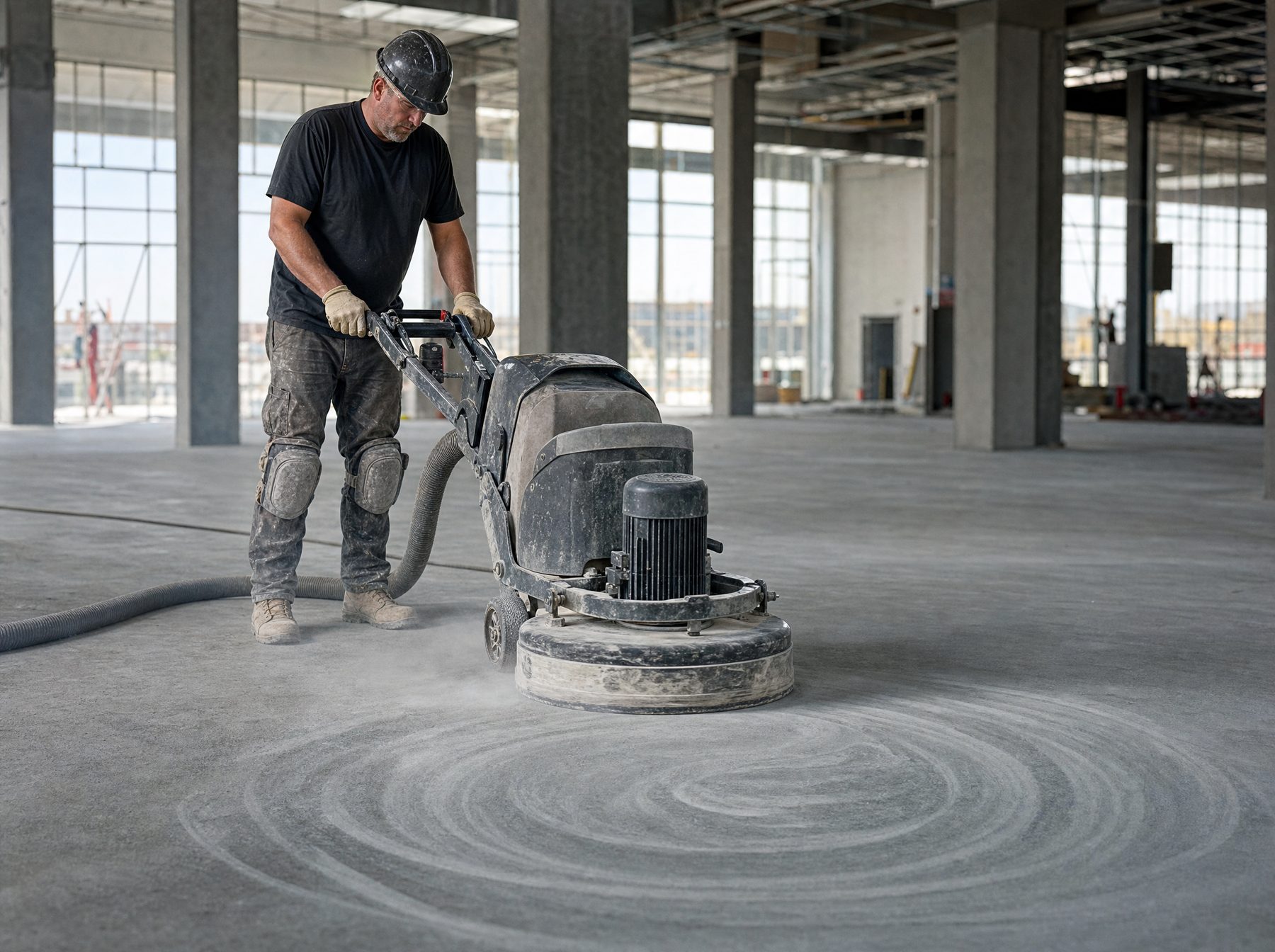
Coatings don't fail because the product was cheap. They fail because nobody opened the slab first. We diamond-grind every floor, every time — it's not an upgrade line on your quote.
Hot tires pull soft coatings straight off the concrete. Our systems cure hard enough to park a work truck on in summer without printing, lifting or peeling.
A written number that doesn't move, a start date we keep, and a walkthrough at the end. If a slab isn't a good candidate, we'll tell you that instead of selling you a coating.
The work


What we coat
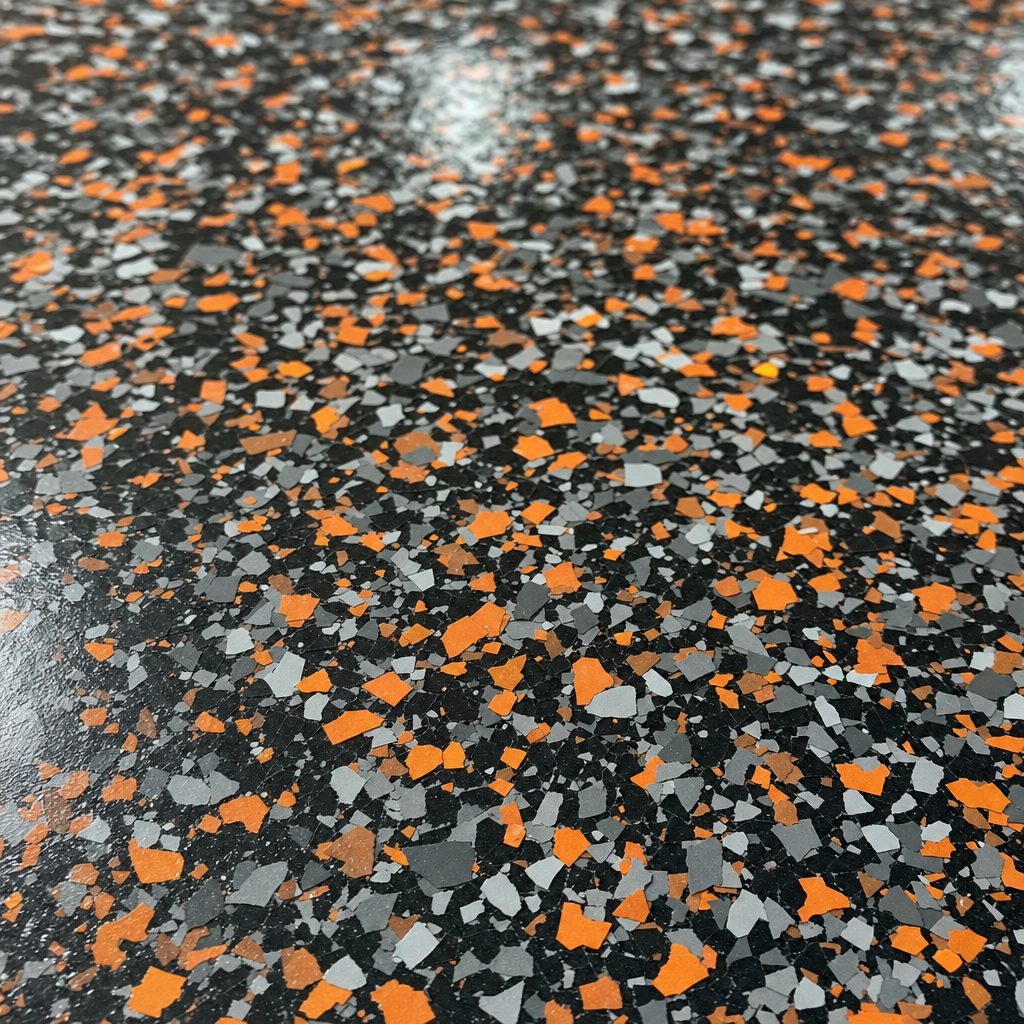
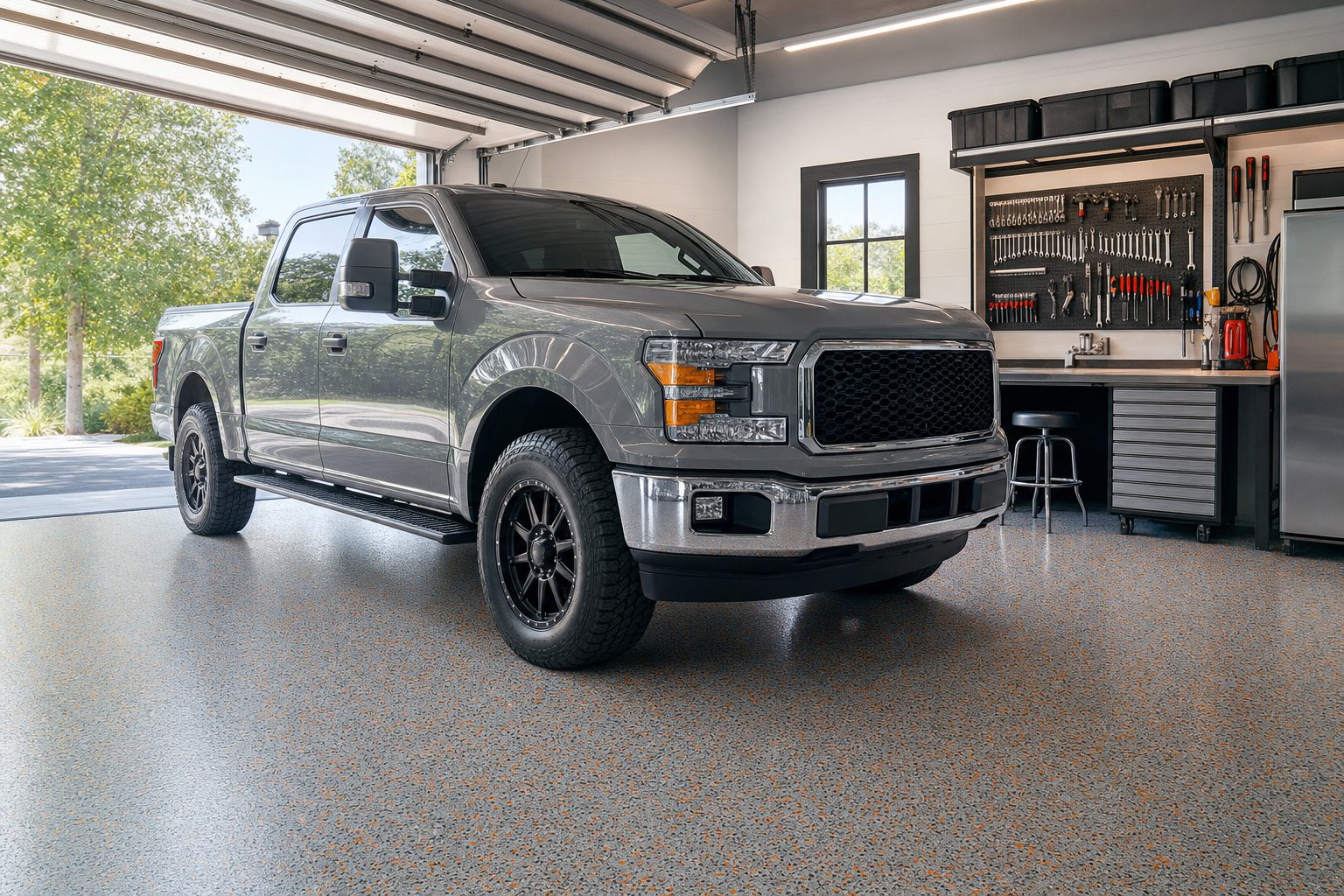
The most common job we run. Flake systems in a colour you pick, wall to wall, with a clean cut-in at the base of every wall.
Slabs that see welders, jacks and dropped steel. Heavier build, tougher topcoat, same obsessive prep underneath.
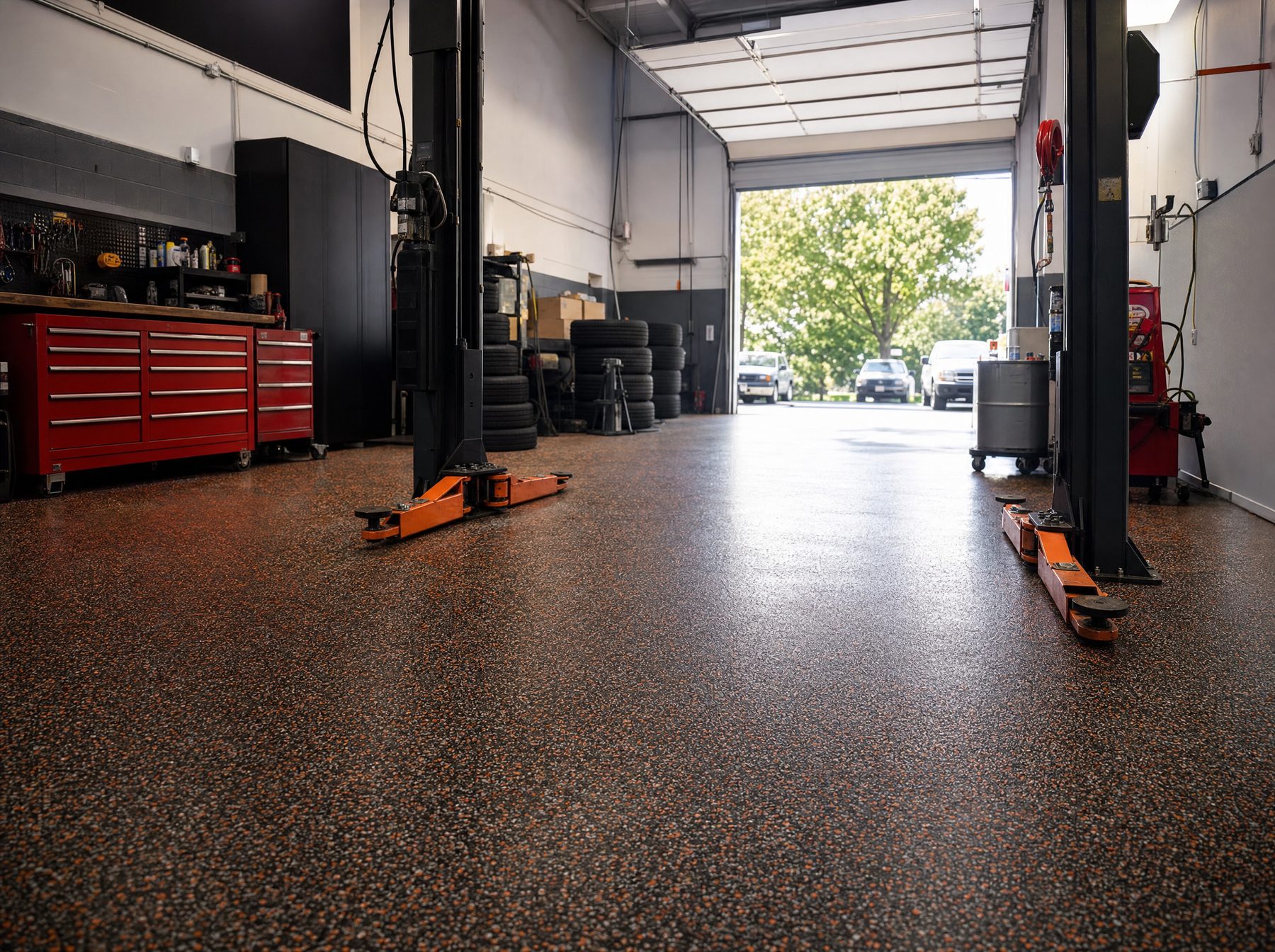
Lifts, oil, brake fluid and constant tire traffic. Chemical-resistant systems that wipe clean instead of staining.
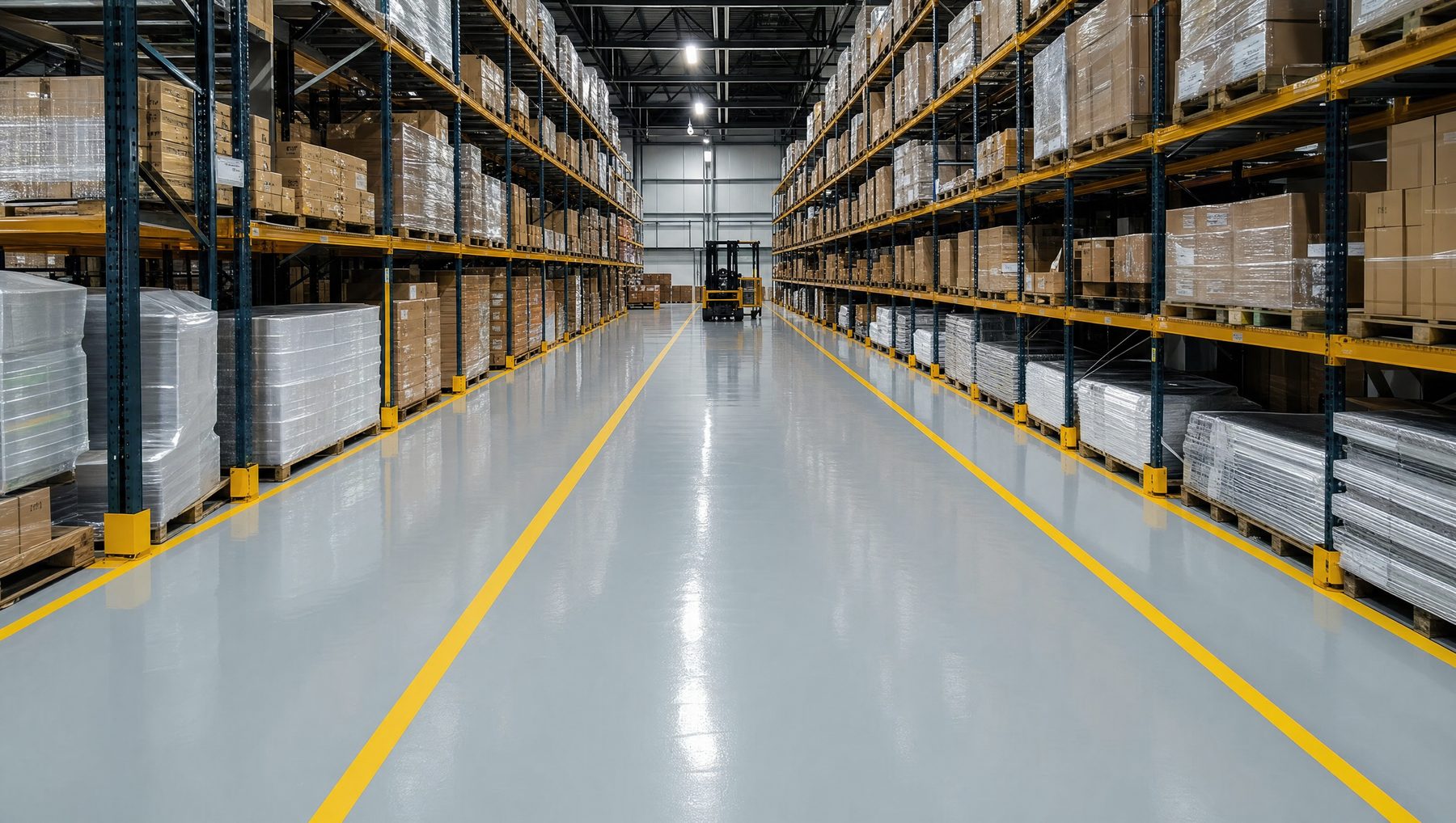
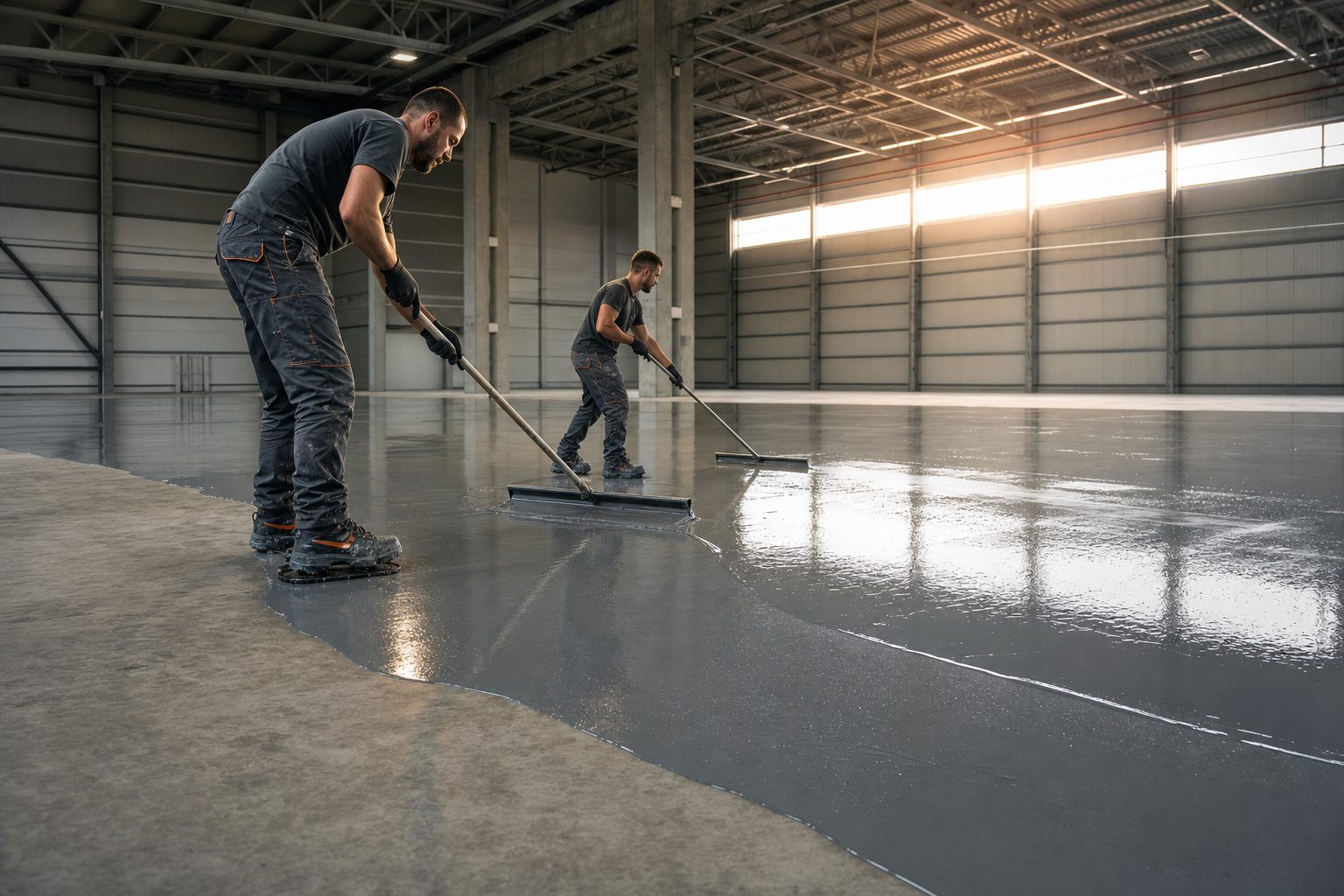
Large-format pours with line striping and traffic markings, scheduled around your shifts so nothing stops.
Exterior-rated, UV-stable finishes with texture built in — sun and rain don't chalk them out.
Got a good slab already? Sometimes the right answer is grinding and sealing what's there instead of coating it.
Every floor includes
✓Full diamond grind. Every square foot mechanically profiled — never acid-etched, never just swept.
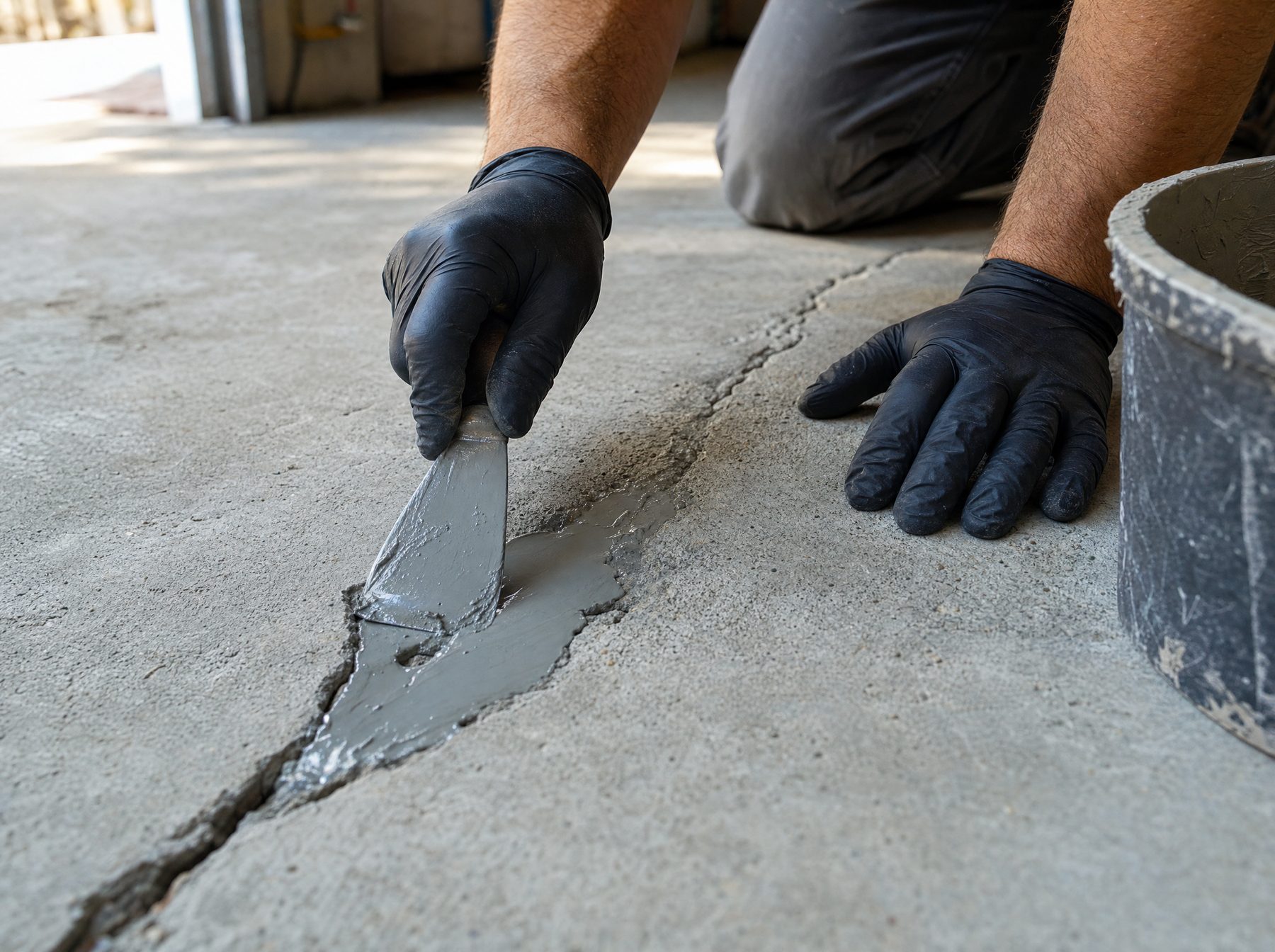
✓Crack & spall repair. Filled, levelled and cured before any coating goes down.
✓Moisture testing. We check what's coming up through the slab before we trap it under a coating.
✓Colour consultation. Real flake samples in your space, in your light, before you commit.
✓Cut-in edges. Clean lines at walls, posts and door thresholds — no ragged overspray.
✓Contained clean-up. Dust vacuumed at the grinder and the space left swept and clear.
✓Final walkthrough. We look at the floor together before anyone calls it done.
✓Care instructions. How to clean it and what to keep off it, in writing.
Why epoxy
Park hard-worked trucks straight off the highway. The coating doesn't lift, peel or print.
Oil, coolant, paint, chemicals — wipe and move on. Nothing soaks in, nothing stains.
Dust stops living in your floor. One pass with a mop and it looks poured-yesterday again.
Fast-cure topcoats get you rolling back in fast — we schedule around your shop, not ours.
Bare slab vs coated slab
Why coatings fail
If you've seen an epoxy floor peel up in sheets, it almost certainly wasn't the epoxy's fault. Here's what actually goes wrong — and what we do instead.
Concrete straight off the trowel is sealed tight. Coating fails to key into it and lifts the first time a tire twists on it. Acid etching and a stiff broom don't fix that — mechanical grinding does. We diamond-grind every floor to a consistent profile, which is also the slowest, dustiest part of the job and the first thing a cheap quote cuts.
Slabs poured without a vapour barrier — common in older Dallas builds — move water up through the concrete year round. Seal it under a coating with nowhere to go and hydrostatic pressure lifts the floor. We test for it first, and use a moisture-tolerant primer where the readings call for one.
Big-box kits are thin, water-based, single-coat products designed to be affordable rather than durable. A real system is a primer, a 100%-solids body coat, broadcast flake and a polyaspartic topcoat — several times the build, and the topcoat is what actually takes the abuse.
Straight answers
Most two-car garages are a one- or two-day job: grind and repair on day one, coat and broadcast, then the topcoat. Bigger slabs, heavy repairs or exterior work can add a day. You'll get the real number for your floor at the quote, not a guess after we start.
Typical schedule is light foot traffic the next day and vehicles after about 72 hours. Cure times move with temperature and humidity, so we confirm the exact dates for your install at the walkthrough — and we'd rather you wait one extra day than mark a floor you just paid for.
That's the fear almost everyone starts with, and it's fair. Store kits are thin paint over concrete that usually wasn't ground first. We're installing a multi-layer system over a mechanically profiled slab, which is a completely different thing — see "Why coatings fail" above for what actually goes wrong.
Almost certainly not. Cracks, spalling, pits and old oil stains are normal starting conditions and get handled during prep — grinding removes the contaminated surface layer and repairs go in before coating. The rare disqualifier is severe structural movement or a slab with active water coming through it, and we'll tell you straight if that's what we find.
A full flake broadcast has texture built into it, which is why we recommend it for garages and shops over a smooth solid colour. If the floor will regularly see water — a wash bay, an exterior slab — we add an anti-slip aggregate to the topcoat. Just ask at the quote.
For shops and warehouses, yes — we section the floor and work in phases so you keep operating, usually starting with the bays you can spare. For a home garage it's simpler if the space is empty, and we'll tell you exactly what needs to move before we arrive.
Sweep or blow it out, mop it when it needs it. No wax, no special product, nothing abrasive. Don't drag steel across it and don't leave a floor jack parked on one point for months. That's genuinely the whole maintenance manual, and you get it in writing at the walkthrough.
The process

Diamond grinding opens the slab — coatings fail on lazy prep, so we never skip it.

Cracks, spalls and pits filled and leveled. The floor under your floor matters.

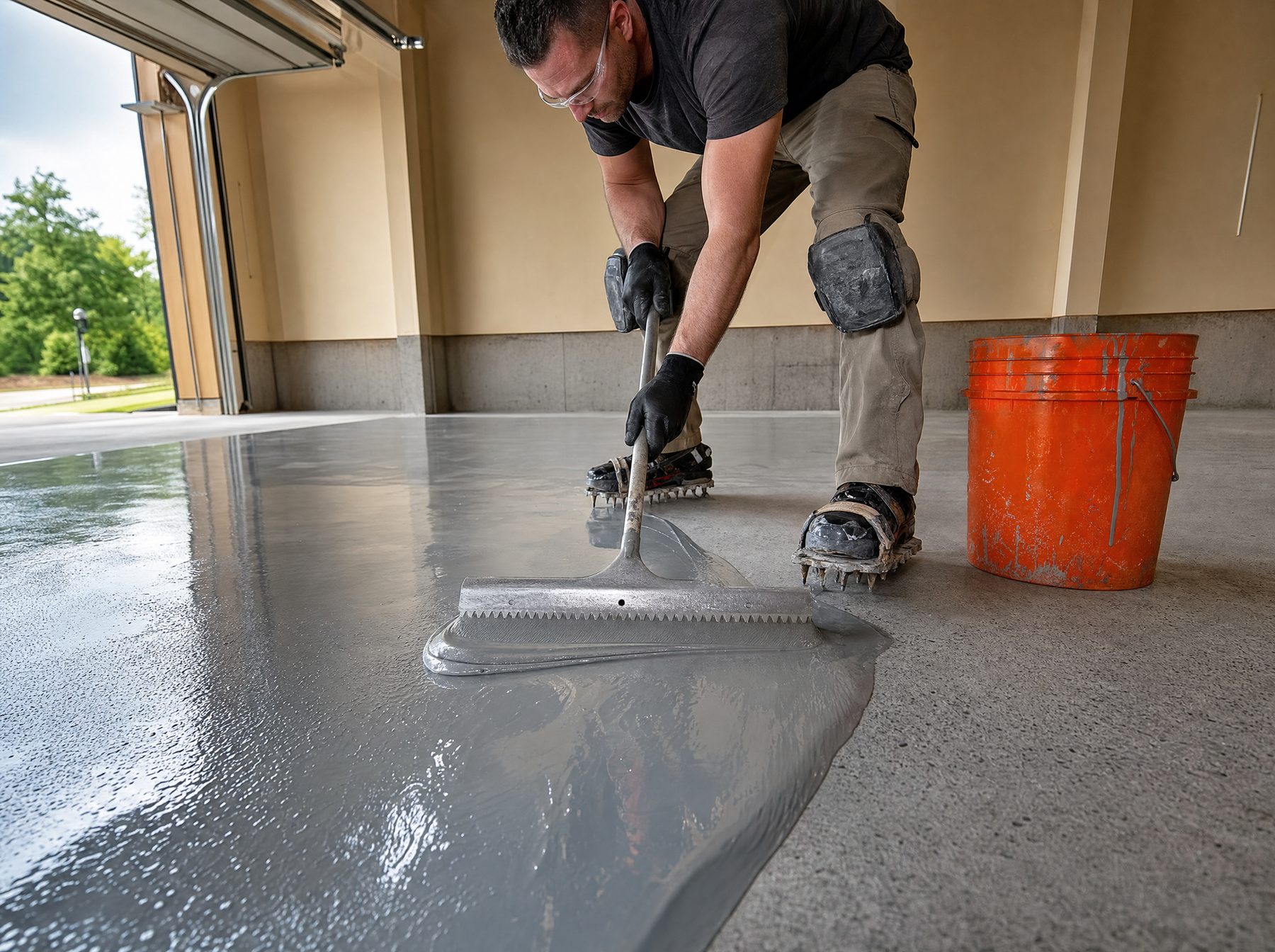
100%-solids epoxy, broadcast to spec — colour and texture picked by you.

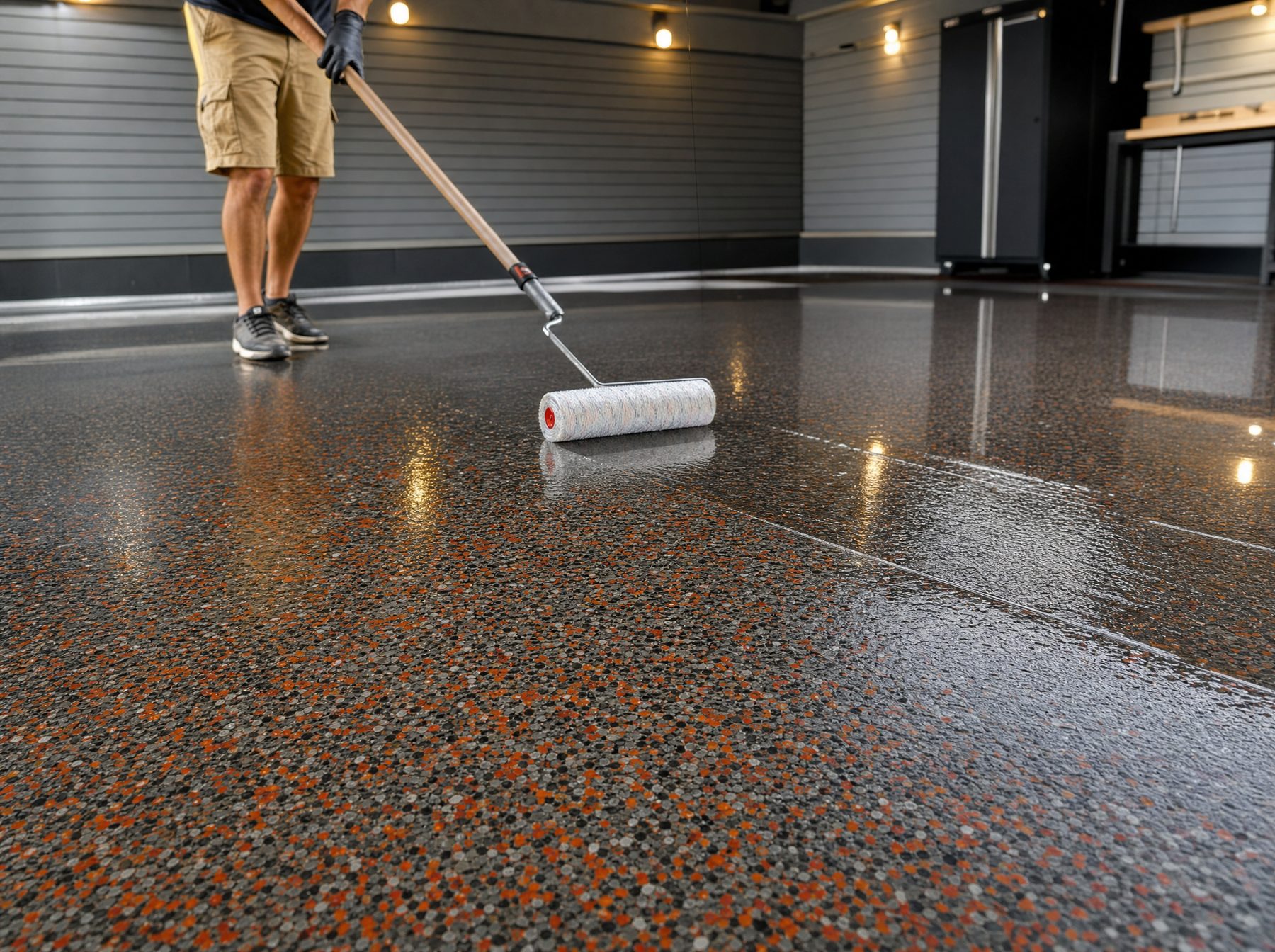
Polyaspartic topcoat locks it down against UV, chemicals and years of abuse.
A typical two-day install
We mask walls, thresholds and anything staying in the space, then run the diamond grinder with a vacuum shroud on it. This is the loud part. Dust is captured at the head rather than blown around your house or shop.
Cracks, spalls and pits get filled and levelled, then the whole slab is vacuumed to a clean profile. Anything that needs to cure gets its time before the next step — this is where rushing shows up two years later.
The 100%-solids body coat goes down wet and the colour flake is hand-broadcast into it to refusal, so the coverage is even edge to edge. The floor is off-limits overnight while it hardens.
Loose flake gets scraped and vacuumed off to leave a flat, even texture. Skip this and the topcoat traps every high point — it's the difference between a floor that feels smooth and one that feels like sandpaper.
The polyaspartic topcoat is rolled on, edges cut in clean, and we walk the finished floor with you. You get the care instructions and the cure schedule before we pull out.
Light foot traffic the next day, vehicles at around 72 hours. Keep water and heavy loads off it until then. Exact timings depend on temperature and humidity, so we confirm yours on the day rather than quoting a brochure number.
Before we arrive
01An empty slab. Cars, shelving, fridges and boxes out of the space. Tell us if that's a problem — we can help plan it.
02Power. A standard outlet for hand tools. Larger grinders run off our own generator, so no panel work needed.
03Water access. An outside tap is enough.
04A parking spot. Room for a truck and trailer near the door for the day.
05Your colour picked. We bring samples at the quote so this is settled well before install day.
06Somewhere for the car. The driveway works — just not on the fresh floor.
No pressure. No games.
Tell us about the slab — garage, shop or warehouse. We'll look at it, measure it, and give you a written number that doesn't move.
01You send four details — takes under a minute.
02We text you back the same day and set a time that works around your shop.
03We measure on site and hand you a written number that doesn't move.
Weekdays 7am–5pm · weekend calls welcome · Dallas and surrounding
What moves the number
Two garages the same size can be very different jobs. Anyone who gives you a firm price without seeing the slab is either guessing or planning to revise it later. These are the things we're actually looking at:
Total area sets the baseline, but cut-in length matters too — a long narrow shop with posts and doorways takes more edge work than an open square of the same size.
How much grinding it needs, how many cracks and spalls have to be repaired, and whether there's old coating, glue, paint or sealer to remove first. This is the biggest single swing in most quotes.
Solid colour, full flake broadcast or metallic; standard build or heavy-duty. Different materials, different labour, genuinely different prices — and we'll tell you where the extra spend is worth it and where it isn't.
If the slab tests wet, it needs a moisture-tolerant primer. That's a real cost, and skipping it is how floors fail — so it goes on the quote rather than getting quietly left out.
Ground-floor drive-in access is easy. Basements, tight gates, upper floors, or work that has to happen after hours around a running business all take more planning.
Where we work
If you're near the edge of this list, ask anyway — we travel for the right job.
Mon–Fri 7:00am–5:00pm · weekend calls welcome